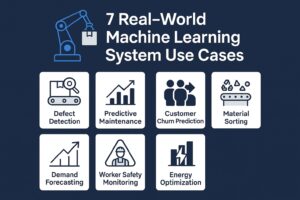
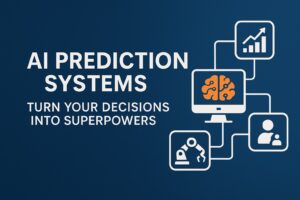
Modern companies are no longer asking “Should we use AI?” Now they’re asking: “How do we design machine learning systems that deliver real business value?”
Read More
Modern companies are no longer asking “Should we use AI?” Now they’re asking: “How do we design machine learning systems that deliver real business value?”
Read More
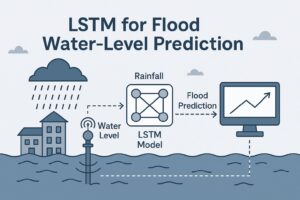
Modern cities face increasing challenges from heavy rainfall, rapid urbanization, and aging drainage systems. Traditional hydrological models—such as the Rational Method or Manning’s Equation—work well for engineering design, but they struggle with non-linear, real-time flood behavior, especially when multiple factors interact:
Read More
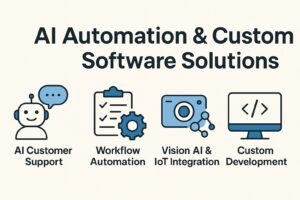
Singapore businesses are rapidly investing in custom-built systems and AI automation. But behind every fast, efficient workflow lies a complex technical architecture designed for reliability, scalability, security, and seamless integration.
Read More
Singapore has always been an early adopter of digital transformation. But in 2025, the landscape is shifting even faster: labour costs continue to rise, customer expectations are higher than ever, and companies are competing with global players.
Read More
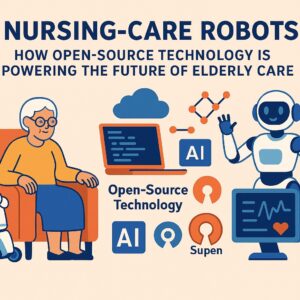
The world is aging faster than ever — and nowhere is this shift more visible than in Asia. As populations age and caregiver shortages grow, nursing-care robots are emerging as one of the most important innovations in modern healthcare. These robots are no longer just futuristic concepts; they are already assisting caregivers, supporting elderly independence, […]
Read More
Artificial Intelligence is no longer a tool companies “use.” It is becoming the foundation of how successful companies operate.
Read More
🌤️ The Story Begins: A Company Drowning in Uncertainty A factory manager once said: “I’m not afraid of problems. I’m afraid of not knowing what will happen next.”
Read More
The world is experiencing one of the most rapid technology booms in history. AI is everywhere — in software, business tools, creative platforms, search engines, and consumer apps.
Read More
Predicting stock prices has always been one of the most challenging tasks in financial analytics. Markets move fast, react emotionally, and are influenced by thousands of visible and invisible factors. But thanks to recent advances in deep learning, investors and analysts now have powerful tools to uncover patterns, quantify signals, and enhance prediction accuracy.
Read More
Managing COIs (Certificates of Inspection) inside a factory is usually a slow and manual process. QC staff search for customers, check lot numbers, look up QC results, generate Excel files, and manually send reports.
Read More
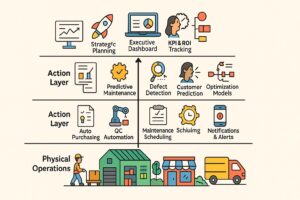
Factories today demand more than traditional automation. Rising production expectations, stricter quality requirements, labor shortages, and the need for instant decision-making require a new class of intelligent systems—systems that can observe, analyze, decide, and act on their own.
Read More
The global AI boom is driven by unprecedented demand for computing power. But beneath the hype lies a complex ecosystem of tech giants, GPU suppliers, AI labs, and cloud providers, all feeding into a feedback loop that many analysts now describe as an AI bubble.
Read More
A Complete Technical Guide with Dataset Examples and Practical Workflows Deep learning is rapidly transforming the property development industry. From evaluating land suitability to monitoring construction safety to predicting property prices, AI provides faster, more accurate, and more scalable decision-making across every stage of a development project.
Read More
Many companies rely on software systems built years ago—critical systems that keep operations, logistics, sales, and production running every day. Over time, these systems become harder to maintain: libraries become obsolete, documentation is missing, developers change jobs, and unexpected bugs start disrupting business operations.
Read More
Python deep learning has become one of the most important technologies in modern factory automation. Manufacturers across electronics, automotive, food processing, textile, packaging, and recycling use AI to improve quality control, reduce defects, automate visual inspection, and optimize production lines.
Read More
A Complete Guide to How Models Learn, Improve, and Get Evaluated When learning machine learning or deep learning, one of the most important foundations is understanding the three phases of model development:
Read More
Why Edges Come Before Shapes, Why We Use Conv2d, and Why ReLU Must Follow Convolution When beginners first learn about neural networks — especially convolutional neural networks (CNNs) — they often ask:
Read More
Counterfeit goods are becoming increasingly sophisticated, and traditional manual inspection is no longer enough to protect brands and customers. Today’s retailers need a fast, accurate, and scalable way to verify authenticity across branches, staff, and product lines.
Read More
Introduction In fast-moving markets, timing a breakout or identifying early trend alignment can define a successful trading strategy. The SimpliBreakout suite is a Python-based toolkit designed to empower traders, analysts, and quant developers with advanced, customizable scanners for breakout detection, EMA crossovers, and peer comparisons. It supports a wide range of global markets—from the S&P […]
Read More
University life should be exciting — not chaotic. Between class schedules, broken dorm air conditioners, lost student IDs, and last-minute event announcements, students often juggle dozens of disconnected systems every day.
Read More