Articles City

How to Build a Thailand-Specific Election Simulation
City

How to Build a Thailand-Specific Election Simulation

Predicting elections in Thailand is not about guessing winners. It is about simulating parliamentary outcomes under uncertainty—taking into account Thailand’s electoral system, regional voting behavior, and coalition politics. This article explains how to build a Thailand-specific election simulation model using Python, in a way that is transparent, probabilistic, and honest about uncertainty. Why Thailand Needs […]

Read More


Why Replacing Legacy Systems Fails in Government (And What Works Instead)
City Dev

Why Replacing Legacy Systems Fails in Government (And What Works Instead)

Government agencies around the world share a familiar frustration: critical systems built decades ago are still running core services, yet no longer fit today’s digital expectations. When the pain becomes too visible, the most common reaction is also the most dangerous one: “Let’s replace the legacy system.” History shows that this approach fails far more […]

Read More
Vertical AI Use Cases Every Local Government Actually Needs
AI City

Vertical AI Use Cases Every Local Government Actually Needs

Local governments around the world are under pressure to do more with limited budgets, limited staff, and legacy systems. While AI is often presented as a futuristic solution, many public-sector AI projects fail because they focus on technology first instead of government workflows. This is where Vertical AI becomes essential. Vertical AI does not start […]

Read More
Designing Digital Service Delivery for Multi-Department Governments
City Dev

Designing Digital Service Delivery for Multi-Department Governments

Digital service delivery is no longer about building a single website or launching a standalone mobile app. For multi-department governments—such as provinces, prefectures, municipalities, or large ministries—the real challenge lies in coordination, integration, and sustainability across many independent units, each with its own mandates, data, and legacy systems. This article explores how to design digital […]

Read More
The Top 7 Reasons Digital Government Services Fail After Launch
City Dev

The Top 7 Reasons Digital Government Services Fail After Launch

Digital government services often launch with high expectations: improved efficiency, better citizen experience, and reduced operational costs. Yet, many of these systems struggle—or quietly fail—within months after going live. This article explores the seven most common reasons digital government services fail after launch, based on real-world GovTech projects and system integration experience.

Read More
Reference Architecture for Provincial / Municipal Digital Systems
City Dev

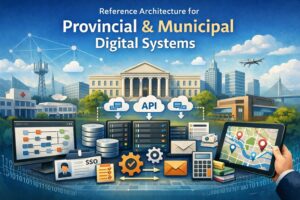
Reference Architecture for Provincial / Municipal Digital Systems

Local governments—provinces, municipalities, prefectures, cities—face a unique digital challenge. They must deliver reliable public services over 10–20 year lifecycles, integrate with national systems, survive vendor changes, and operate under tight budgets and procurement constraints. This article presents a practical reference architecture for provincial and municipal digital systems. It is not tied to any product or […]

Read More
A Practical GovTech Architecture: ERP, GIS, Citizen Portal, and Data Platform
City Dev

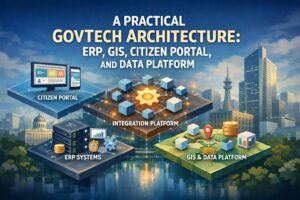
A Practical GovTech Architecture: ERP, GIS, Citizen Portal, and Data Platform

Local governments are under increasing pressure to deliver better digital services with limited budgets, fragmented legacy systems, and small IT teams. Many GovTech initiatives fail not because of technology choices, but because systems are designed in isolation. This article presents a practical, integration-first GovTech architecture that local governments can realistically implement and evolve over time—without […]

Read More
Why Emergency Systems Must Work Offline First (Lessons from ATAK)
City Network Satellite Security

Why Emergency Systems Must Work Offline First (Lessons from ATAK)

In every major disaster—floods, earthquakes, wildfires, or large-scale accidents—the first thing that fails is often not people, but infrastructure. Power goes down. Mobile networks become congested or unavailable. Internet connectivity becomes unreliable or disappears entirely. Yet many so-called “smart” emergency systems are designed with an assumption that connectivity will always be available. This assumption is […]

Read More
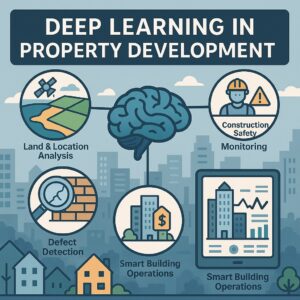
Deep Learning in Property Development
AI City Satellite

Deep Learning in Property Development

A Complete Technical Guide with Dataset Examples and Practical Workflows Deep learning is rapidly transforming the property development industry. From evaluating land suitability to monitoring construction safety to predicting property prices, AI provides faster, more accurate, and more scalable decision-making across every stage of a development project.

Read More