
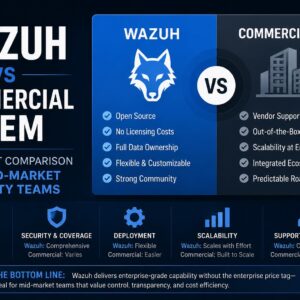
ถ้าทีม Security ขององค์กรกำลังประเมินตัวเลือก SIEM คุณจะพบกับทางแยกที่ทุกคนเจอเหมือนกัน: จ่ายหกหลักสำหรับ Splunk หรือ Sentinel หรือรัน Wazuh ในราคาค่าโครงสร้างพื้นฐานอย่างเดียว?
Read More
If your security team is evaluating SIEM options, you will hit the same fork in the road everyone hits: pay six figures for Splunk or Sentinel, or run Wazuh for the cost of the infrastructure.
Read More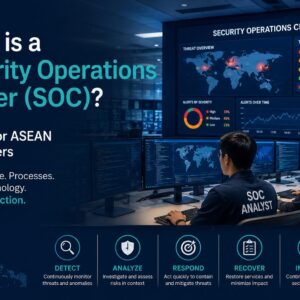
每周都有新的安全事件见诸报端:医院遭勒索软件攻击、制造企业生产数据被窃、政府机构邮件系统遭入侵。攻击势头从未减弱。但东南亚大多数企业仍然缺乏系统性的威胁检测、调查和响应机制。
Read More
毎週のように新たなニュースが飛び込んできます。病院がランサムウェアに感染、製造業者の生産データが流出、政府機関のメールシステムが侵害。攻撃は一向に減る気配がありません。しかし東南アジアのほとんどの組織には、こうした脅威を体系的に検知・調査・対応する仕組みがいまだに存在しません。
Read More
ทุกสัปดาห์มีข่าวใหม่: โรงพยาบาลถูก Ransomware, ข้อมูลการผลิตของโรงงานถูกขโมย, ระบบอีเมลของหน่วยงานรัฐถูกโจมตี การโจมตีไม่ได้ลดลง แต่องค์กรส่วนใหญ่ในไทยและอาเซียนยังไม่มีระบบที่เป็นระบบในการตรวจจับ สืบสวน หรือตอบสนองต่อภัยคุกคามเหล่านี้
Read More
Every week, another headline: a hospital hit by ransomware, a manufacturer’s production data exfiltrated, a government agency’s email system compromised. The attacks are not slowing down. But most organizations in Southeast Asia still have no systematic way to detect, investigate, or respond to them.
Read More
IP摄像头、PLC控制器、暖通空调系统、门禁面板、智能电表。现代企业中充斥着从未以安全为设计前提的联网设备,而大多数组织根本不清楚这些设备在网络上究竟在做什么。
Read More
IPカメラ、PLC、空調コントローラ、入退室管理パネル、スマートメーター。現代の企業はセキュリティを考慮せずに設計されたデバイスで満ちており、多くの組織はそれらのデバイスがネットワーク上で何をしているのかを把握できていません。
Read More
กล้องวงจรปิด IP, ตัวควบคุม PLC, ระบบ HVAC, แผงควบคุมการเข้าออก, มิเตอร์อัจฉริยะ องค์กรสมัยใหม่เต็มไปด้วยอุปกรณ์ที่เชื่อมต่อเครือข่าย แต่ส่วนใหญ่ไม่ได้ถูกออกแบบมาให้รองรับความปลอดภัยตั้งแต่แรก และน้อยองค์กรมากที่รู้จริงๆ ว่าอุปกรณ์เหล่านั้นกำลังสื่อสารอะไรบนเครือข่าย
Read More
IP cameras. PLCs. HVAC controllers. Access panels. Smart meters. The modern enterprise is full of connected devices that were never designed with security in mind — and most organizations have no idea what those devices are doing on the network.
Read More