Global-Ready System Development for EC–ERP Integration with AI & Workflow
Why Enterprises Worldwide Need Reliable Automation Now
Across global enterprises, e-commerce platforms, ERP systems, internal tools, and legacy applications have evolved independently over many years. The result is a complex operational landscape where:
- APIs exist but are limited, unstable, or inconsistent
- File-based integration (CSV, batch jobs, SFTP) is still mission-critical
- Business changes require costly, risky system modifications
As a result, many organizations say:
“We want automation, but failures are unacceptable.”
“AI is promising, but we can’t let it directly control business operations.”
We address these challenges with a clear separation of AI intelligence, workflow responsibility, and execution, designed for real-world enterprise operations.
Our Core Philosophy: AI Decides, Workflows Take Responsibility
Many AI chatbot solutions attempt to:
- understand requests
- execute actions
- recover from failures
all at once.
This approach is risky for enterprise systems.
Our Design Principle
| Responsibility | Component | Why It Matters |
|---|---|---|
| Understanding & judgment | AI / LLM | Flexible, language-aware decision making |
| State, retries, approvals | Workflow engine | Deterministic, auditable, failure-resistant |
| Execution | Business systems / RPA | Precise, repeatable, controlled |
This separation enables automation that is explainable, auditable, and safe—critical for enterprises operating across regions and regulatory environments.
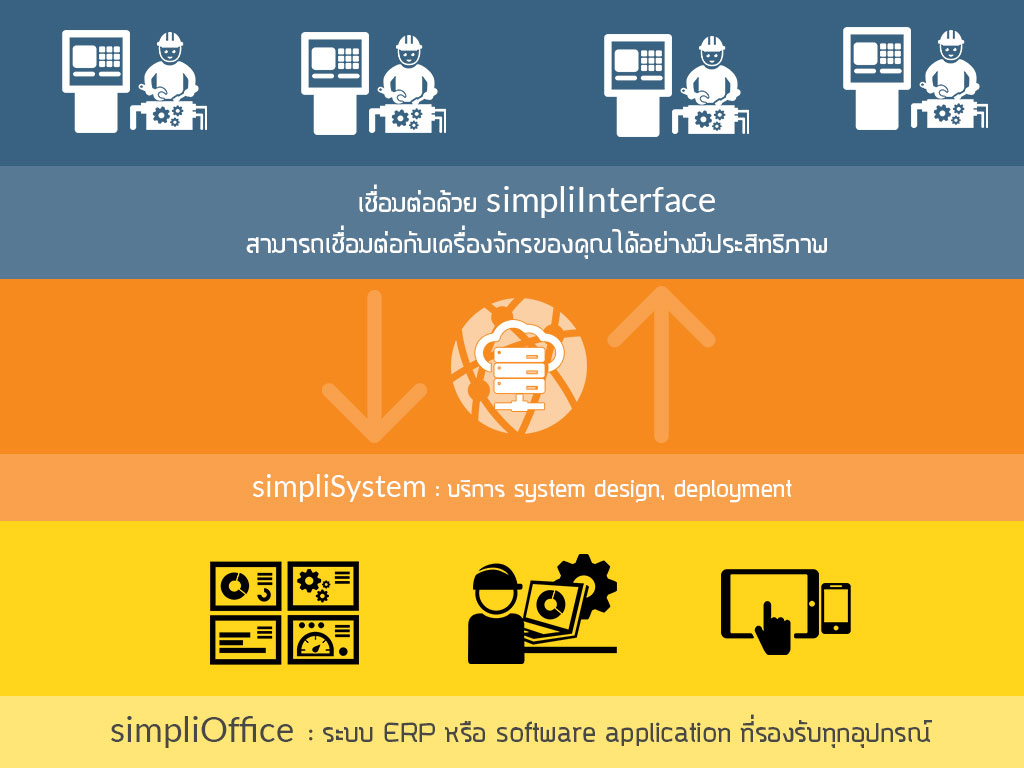
Reference Architecture (EC × ERP × AI)
- E-commerce platforms (orders, customers, payments)
- ERP systems (inventory, invoicing, procurement)
- AI layer (intent understanding, structured extraction)
- Workflow orchestration (state, approval, retry, compensation)
All components are loosely coupled for long-term maintainability.
System Architecture Overview
flowchart LR
  U["Customer / Internal User"] --> UI["Chat UI / Web / Mobile / Messaging"]
  UI --> AG["Agent API"]

  AG --> LLM["AI / LLM\n(Intent & Data Extraction)"]
  AG --> WF["Workflow Engine\n(Temporal)"]

  WF --> ECW["E-commerce Worker"]
  WF --> ERPW["ERP Worker"]

  ERPW -. "When no API is available" .-> RPA["Robot Framework\n(UI Automation)"]

  ECW --> EC["E-commerce System"]
  ERPW --> ERP["ERP / Core Systems"]
  RPA --> ERPUI["Legacy ERP UI"]

  WF --> LOG["Audit Logs & Execution History"]
Key points
- AI never directly mutates business data
- All state, retries, and approvals are managed by workflows
- Even legacy UI automation is fully auditable and controlled
Recommended Software Stack (Example)
Below is a representative stack we frequently adopt. Each layer can be adapted to on‑premise, cloud, or hybrid environments.
1) AI & Interaction Layer
- LLM: Local LLMs (e.g., Ollama) or cloud LLMs, depending on data policy
- RAG / Knowledge Search: pgvector, OpenSearch, Qdrant
- Tool & prompt control: Strict application-side enforcement (AI cannot write to DBs directly)
2) Workflow Orchestration
- Workflow Engine: Temporal
- Workers / Activities: EC integration, ERP integration, notifications, approvals
3) Application & APIs
- Backend: Django or FastAPI
- Authentication: SSO (OIDC / SAML), enterprise IAM, step-up authentication (OTP)
- Notifications: Email, Slack, LINE, SMS (depending on region)
4) Data, Logging & Audit
- Database: PostgreSQL
- Audit trail: Workflow IDs, actors, inputs, outcomes
- Observability: OpenTelemetry + Grafana / Datadog / ELK
5) Legacy Integration (When Required)
- File-based integration: SFTP + CSV/TSV
- RPA / UI automation: Robot Framework (used only as a last resort)
6) Runtime & Delivery
- Containers: Docker
- Production: Kubernetes, VM, or on‑premise
- CI/CD: GitHub Actions, GitLab CI
Our default strategy is API-first, file-based where appropriate, and RPA only when unavoidable.
Why We Use Temporal for Enterprise Workflows
We use Temporal as the backbone of business orchestration because it excels at:
- Long-running processes (returns, approvals, inventory waits)
- Surviving restarts and partial failures
- Providing deterministic execution history
- Clearly answering who did what, when, and why
These properties are essential for compliance, auditability, and operational trust in global organizations.
A Pragmatic Approach to Legacy ERP Systems
In global enterprises, ERP integration often falls into one of three patterns:
- APIs exist but are constrained
- File-based (CSV/SFTP) integration is standard
- UI-only access is unavoidable
We apply a progressive integration strategy:
- API integration (preferred)
- File-based integration (stable and auditable)
- UI automation (Robot Framework, last resort)
All execution paths remain under workflow control, ensuring retries, approvals, and traceability.
Example Business Scenarios
EC Order → ERP Sales Order → Inventory Allocation
- Order is placed in EC
- AI normalizes and validates data
- Workflow checks availability
- ERP creates sales order and reserves inventory
- Failures trigger retries or human approval
Order Cancellation via Chat
- Customer requests cancellation
- AI extracts order ID and intent
- Workflow validates eligibility and ownership
- EC and ERP are updated consistently
- Refund or reversal is tracked end-to-end
What We Provide
- EC–ERP integration architecture & delivery
- AI integration with enterprise safeguards
- Workflow design using Temporal
- Legacy system and RPA integration
- Documentation and operational design for global teams
We focus on systems that keep running, not just tools that look impressive in demos.
For Global Teams & Enterprises
Automation is not about speed alone. It must be:
explainable, resilient, and accountable.
Our role is to help you design systems where:
AI assists decision-making, while responsibility remains with people and processes.
Contact
- Modernize EC–ERP integration without replacing core systems
- Introduce AI safely into business workflows
- Build automation platforms that scale globally
📧 Email: hello@simplico.net
🌐 https://www.simplico.net
Get in Touch with us

Chat with Us on LINE
iiitum1984
Related Posts
- ERP项目为何失败(以及如何让你的项目成功)
- Why ERP Projects Fail (And How to Make Yours Succeed)
- Payment API幂等性设计:用Stripe、支付宝、微信支付和2C2P防止重复扣款
- Idempotency in Payment APIs: Prevent Double Charges with Stripe, Omise, and 2C2P
- Agentic AI in SOC Workflows: Beyond Playbooks, Into Autonomous Defense (2026 Guide)
- 从零构建SOC:Wazuh + IRIS-web 真实项目实战报告
- Building a SOC from Scratch: A Real-World Wazuh + IRIS-web Field Report
- 中国品牌出海东南亚:支付、物流与ERP全链路集成技术方案
- 再生资源工厂管理系统:中国回收企业如何在不知不觉中蒙受损失
- 如何将电商平台与ERP系统打通:实战指南(2026年版)
- AI 编程助手到底在用哪些工具?(Claude Code、Codex CLI、Aider 深度解析)
- 使用 Wazuh + 开源工具构建轻量级 SOC:实战指南(2026年版)
- 能源管理软件的ROI:企业电费真的能降低15–40%吗?
- The ROI of Smart Energy: How Software Is Cutting Costs for Forward-Thinking Businesses
- How to Build a Lightweight SOC Using Wazuh + Open Source
- How to Connect Your Ecommerce Store to Your ERP: A Practical Guide (2026)
- What Tools Do AI Coding Assistants Actually Use? (Claude Code, Codex CLI, Aider)
- How to Improve Fuel Economy: The Physics of High Load, Low RPM Driving
- 泰国榴莲仓储管理系统 — 批次追溯、冷链监控、GMP合规、ERP对接一体化
- Durian & Fruit Depot Management Software — WMS, ERP Integration & Export Automation