Vertical Integration of AI: The Next Breakthrough in Modern Business
Artificial Intelligence is no longer a tool companies “use.”
It is becoming the foundation of how successful companies operate.
In the past, businesses adopted horizontal AI — tools like ChatGPT, Copilot, or analytics dashboards. Helpful, but not transformative.
Today, leading companies are moving toward something far more powerful:
Vertical Integration of AI
AI embedded deeply across the entire business stack — from real-world operations to automated decision-making.
This is the shift that will define the next decade of business.
🌐 1. What Is Vertical Integration of AI?
Vertical AI means:
- AI understands your industry
- AI reads your operational data in real time
- AI influences or controls your workflows
- AI continuously improves as your business runs
- AI is not a plugin — it becomes the operating system of the company
Horizontal AI = useful
Vertical AI = transformational
🏭 2. What Vertical AI Looks Like in a Factory
Most factories begin with small AI features:
- A chatbot for SOP help
- A dashboard for reporting
- A few scripts to extract insights
This is good — but it only touches the surface.
A factory with vertical AI looks like this:
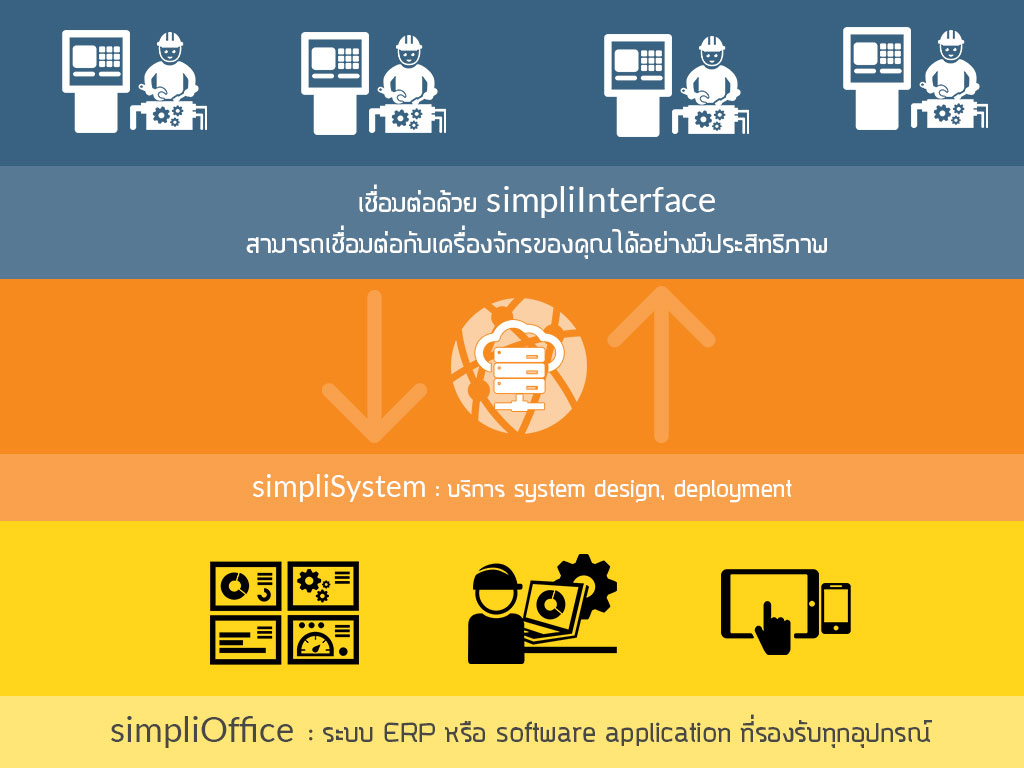
Data Layer
- Sensors streaming machine telemetry
- Cameras sending QC images
- ERP providing orders, stock, and schedules
- Worker actions logged in real time
AI Layer
- Predict when machines will fail
- Predict product defects instantly
- Forecast demand weeks ahead
- Recommend optimal schedules
- Detect inefficiencies and anomalies
Action Layer
- Auto-generate POs
- Auto-schedule maintenance
- Auto-stop defective product lines
- Auto-assign staff tasks
- Auto-optimize production speed
Business Layer
- Real ROI tracking
- Accurate monthly forecasts
- Bottleneck insights
- Cost reduction modeling
This is not “using AI.”
This is running the business through AI.
🛒 3. Examples of Vertical AI in Different Industries
Retail
- Store-level demand forecasting
- Smart replenishment
- Customer behavior prediction
- Dynamic promotions
Logistics
- Route optimization
- Delay prediction
- Automated dispatch
- Fleet health monitoring
Agriculture
- Yield prediction
- AI irrigation control
- Disease/pest detection
- Drone-based field analytics
Finance
- Automated risk scoring
- Fraud detection
- Intelligent underwriting
- Customer profitability prediction
Vertical AI adapts to any industry with repeatable patterns and measurable outcomes.
⚙️ 4. Why Vertical AI Creates Unfair Advantage
Businesses without AI face:
- human-driven guesswork
- slow reaction time
- inconsistent decisions
- high cost of errors
- data they cannot use
Vertical AI solves all of this.
✔ Predictability
Know demand, failures, risks, and customer behavior.
✔ Automation
Turn predictions into actions — automatically.
✔ Operational Speed
AI reacts in milliseconds, not days or weeks.
✔ Consistency
AI never tires, forgets, or changes mood.
✔ Compounding Advantage
More usage → more data → stronger AI → higher performance.
Vertical AI turns your business into a self-improving system.
🧩 5. Vertical AI Integration Roadmap
The path to vertical integration looks like this:
- Identify prediction points
- Capture real operational data
- Train focused AI models
- Integrate AI with workflow systems
- Automate high-confidence actions
- Add dashboards for oversight
- Scale AI across departments
You don’t need to do everything at once.
Every layer you add creates immediate ROI.
📐 6. Vertical AI Architecture — Text Diagram
                 ┌───────────────────────────┐
                 │       Business Layer       │
                 │ • Strategy & Planning      │
                 │ • Management Dashboards    │
                 │ • KPIs & ROI Tracking      │
                 └──────────────┬────────────┘
                                │
                                ▼
                 ┌───────────────────────────┐
                 │        Action Layer        │
                 │ • Auto Purchase Orders     │
                 │ • QC Automation            │
                 │ • Maintenance Scheduling   │
                 │ • Alerts & Notifications   │
                 └──────────────┬────────────┘
                                │
                                ▼
                 ┌───────────────────────────┐
                 │         AI Layer           │
                 │ • Demand Forecasting       │
                 │ • Predictive Maintenance   │
                 │ • Defect Detection         │
                 │ • Customer Prediction      │
                 │ • Optimization Models      │
                 └──────────────┬────────────┘
                                │
                                ▼
                 ┌───────────────────────────┐
                 │        Data Layer          │
                 │ • ERP / POS / CRM Data     │
                 │ • Sensors & IoT            │
                 │ • Cameras (QC / CCTV)      │
                 │ • Operations Log Data      │
                 └──────────────┬────────────┘
                                │
                                ▼
                 ┌───────────────────────────┐
                 │   Physical Operations      │
                 │ • Production Line          │
                 │ • Warehousing              │
                 │ • Retail Operations        │
                 │ • Agriculture / Logistics  │
                 └───────────────────────────┘
🚀 7. The Future Belongs to Vertically Integrated AI Companies
AI is becoming the backbone of:
- decision-making
- planning
- resource allocation
- forecasting
- automation
- optimization
The businesses that adopt vertical AI early will:
- outperform competitors
- operate with near-zero guesswork
- scale faster
- reduce cost dramatically
- achieve superior quality and consistency
This is not optional.
This is the future operating model of modern business.
Vertical AI is how companies evolve into smarter, faster, more resilient organizations.
Get in Touch with us

Chat with Us on LINE
iiitum1984
Related Posts
- ERP项目为何失败(以及如何让你的项目成功)
- Why ERP Projects Fail (And How to Make Yours Succeed)
- Payment API幂等性设计:用Stripe、支付宝、微信支付和2C2P防止重复扣款
- Idempotency in Payment APIs: Prevent Double Charges with Stripe, Omise, and 2C2P
- Agentic AI in SOC Workflows: Beyond Playbooks, Into Autonomous Defense (2026 Guide)
- 从零构建SOC:Wazuh + IRIS-web 真实项目实战报告
- Building a SOC from Scratch: A Real-World Wazuh + IRIS-web Field Report
- 中国品牌出海东南亚:支付、物流与ERP全链路集成技术方案
- 再生资源工厂管理系统:中国回收企业如何在不知不觉中蒙受损失
- 如何将电商平台与ERP系统打通:实战指南(2026年版)
- AI 编程助手到底在用哪些工具?(Claude Code、Codex CLI、Aider 深度解析)
- 使用 Wazuh + 开源工具构建轻量级 SOC:实战指南(2026年版)
- 能源管理软件的ROI:企业电费真的能降低15–40%吗?
- The ROI of Smart Energy: How Software Is Cutting Costs for Forward-Thinking Businesses
- How to Build a Lightweight SOC Using Wazuh + Open Source
- How to Connect Your Ecommerce Store to Your ERP: A Practical Guide (2026)
- What Tools Do AI Coding Assistants Actually Use? (Claude Code, Codex CLI, Aider)
- How to Improve Fuel Economy: The Physics of High Load, Low RPM Driving
- 泰国榴莲仓储管理系统 — 批次追溯、冷链监控、GMP合规、ERP对接一体化
- Durian & Fruit Depot Management Software — WMS, ERP Integration & Export Automation